

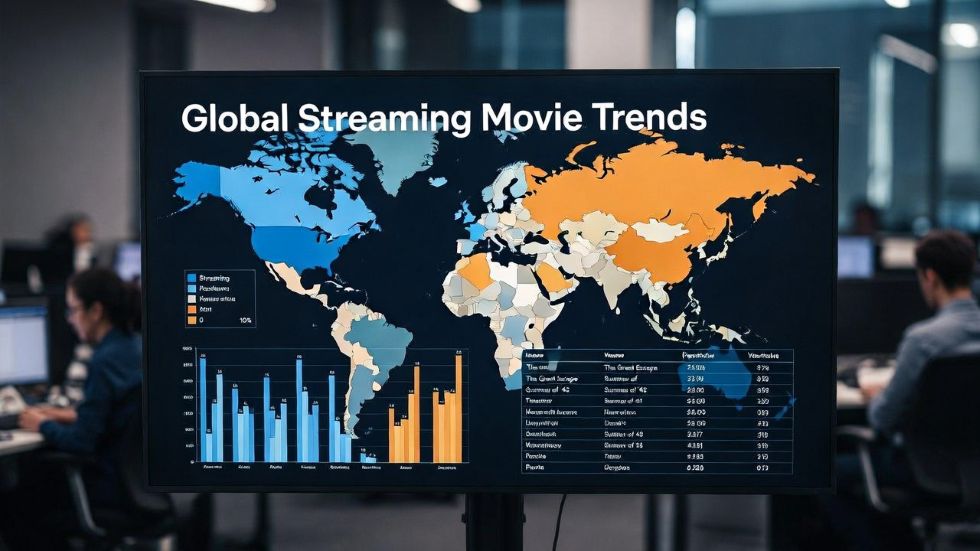
Streaming platforms accounted for more than one third of total television viewing in the United States in 2023, according to Nielsen’s “The Gauge” report. That statistic says a lot about how people watch movies today, but it also says something about how newsrooms talk about them. Film coverage used to revolve around theaters, red carpets, and box office numbers. Now, TV news segments regularly mention streaming charts, online buzz, and international titles that suddenly trend across the internet.
Producers building a quick entertainment segment before the weather report are no longer asking only, “What opened in theaters this weekend?” Instead, they ask what audiences around the world are streaming tonight. That shift is why viewers sometimes hear anchors mention niche platforms and global film libraries, including sites like Cima Now, which hosts collections of international films. A decade ago, foreign releases often stayed in festival circles. Today, a Moroccan drama or a Korean thriller can appear in a TV news rundown simply because it caught fire online overnight.
From Box Office Numbers to Streaming Buzz
Entertainment reporting used to follow a very clear script. Thursday night premieres, Friday box office projections, weekend totals on Sunday. Simple. Predictable. A little boring, if we are honest.
Streaming culture complicated that rhythm in the best possible way. A film can quietly arrive online on a Tuesday, build momentum through social media by Wednesday, and show up on television news by Thursday morning. Journalists watch streaming charts, trending hashtags, and even Reddit threads to see what audiences cannot stop talking about.
Organizations like the Reuters Institute for the Study of Journalism have noted how digital culture shapes newsroom decisions. Editors track online attention almost in real time. If viewers are obsessed with a Spanish mystery or an Egyptian action movie, producers know that story will resonate on air.
The result feels more global than old-school entertainment reporting ever did. TV anchors now talk about films from South Korea, Turkey, France, or the United Arab Emirates as casually as they once discussed Hollywood releases.
Film Festivals Now Spill Into Streaming Headlines
Film festivals still matter. The Cannes Film Festival, Sundance Film Festival, and Toronto International Film Festival remain major story engines for entertainment media. What changed is what happens after the applause fades.
In the past, a critically praised movie might wait months before audiences outside festival cities could see it. Now streaming services purchase distribution rights almost immediately. News programs know viewers might watch that same film within weeks from their couch.
This turns festival coverage into something more immediate. Anchors do not just say, “Critics loved this film at Cannes.” They often add, “You can stream it next month.” That tiny detail transforms a niche festival headline into a practical recommendation for millions of viewers.
Streaming catalogs play a role here too. Platforms that specialize in international cinema, such as Cima Now, create a space where global titles continue to circulate after festival premieres. When those films trend online, TV segments suddenly have a reason to revisit them.
Why Newsrooms Follow the Algorithm
Here is a small newsroom secret. Producers love stories that people are already searching for.
Streaming algorithms generate exactly that kind of momentum. When a movie lands on trending charts, the internet reacts instantly. Social media debates start. Clips spread. Memes appear. Before long, someone in the newsroom notices.
Entertainment reporters often scan ranking lists from major services, alongside analytics from firms like Parrot Analytics, which measures global demand for film and television content. Those signals help editors decide whether a story deserves two minutes on the evening broadcast.
Viewers benefit from that curiosity. The film suggestions delivered during a news segment feel less like advertising and more like friendly tips from someone who stayed up too late scrolling through streaming menus.
For audiences trying to navigate massive catalogs, guides with smart Netflix viewing hacks have become surprisingly useful. Simple tricks like using hidden genre codes, customizing profiles, or improving recommendations can make it easier to discover the same international films reporters mention on TV.
Streaming tips and discovery tools often shape what viewers watch next, which in turn feeds the stories that appear in entertainment news.
Entertainment News Is Becoming Global News
Television news used to treat movies as a local industry story. Hollywood premieres. Celebrity interviews. Awards season predictions.
Streaming culture widened the lens. Global audiences watch the same titles, discuss them on the same platforms, and recommend them to friends across continents. Entertainment coverage followed that path.
A viewer in Manila might hear about a French thriller trending in Europe. Someone in Toronto could learn about an Egyptian comedy gaining traction online. Services like Cima Now help make those cultural exchanges possible by organizing international film libraries that viewers can explore beyond mainstream releases.
That kind of access reshapes storytelling inside newsrooms. Entertainment segments are no longer side notes about celebrity gossip. They often reflect broader cultural trends, digital habits, and the growing influence of global streaming audiences.
Conclusion
Streaming platforms changed how people watch movies. Just as importantly, they changed how journalists talk about them. TV reports that once revolved around theater openings now track algorithms, online buzz, and global viewing habits.
International cinema travels faster than ever, and newsrooms have adapted. Whether the conversation starts with a film festival premiere or a sudden spike in online popularity, platforms like Cima Now remind producers that audiences are curious about stories from everywhere. The big screen still matters, of course. Yet the headlines increasingly come from the streaming queue.


 In recent years, the concept of remote work has changed the way people live. One major development is the rise of the digital nomad visa. Why Wait Italy allows remote workers to live abroad while working for a company that is not based in the host country. This shift has been gaining attention, and TV news outlets are helping spread awareness about it.

 sts seen in action in
  nterstate 80 is a long stretch of highway that brings travellers and motorists directly to New York. It is deemed as one of the most hazardous highways as it carries more than 27,000 vehicles daily; half of which are tractor trailers.






 While using purchased followers could increase exposure for a short time, smart advertisers and partners typically look at engagement data, not vanity numbers. In a transparent landscape, channels or anchors that fail to engage in genuine conversations run the danger of undermining their credibility and the equity of their brands.


 Staying ahead of market trends is crucial for business success, especially for companies like Movers Orange CA. The ability to adapt and make informed decisions can mean the difference between thriving and struggling. One valuable resource that often goes underappreciated in this regard is television news. In this article, we will explore how TV news serves as a powerful tool for the moving industry, helping movers companies unlock key market insights and make informed decisions.


 Film and television have the power to inspire, uplift, and impact audiences in many ways. One such way is through the use of positive affirmations. Positive affirmations are empowering statements that can promote positive thinking and self-confidence. When used in media, positive affirmations can significantly impact audiences.


 Still, they aren’t thankless jobs, because according to the Bureau of Labor Statistics, the related compensations are way above the average annual median $46,800 salary of ordinary US workers.
 That way, they can make immediate and proper adjustments in their transmission equipment.
 Game server hosting is an essential part of the gaming industry. It is not only a good business practice but also a way to provide players with the best gaming experience.
 Families mostly use playpens as a place for their kids to sleep on the go. It’s great when you have a baby because it’s small and can be folded up to save space in your bedroom. Playpens also make it easy to put your child down for a nap during the day. The reason parents need a playpen isn’t a question.
 Digital technology has transformed almost every aspect of contemporary life. Travel, shopping, work, entertainment, and communications are just a
 What is Twitch.tv?